

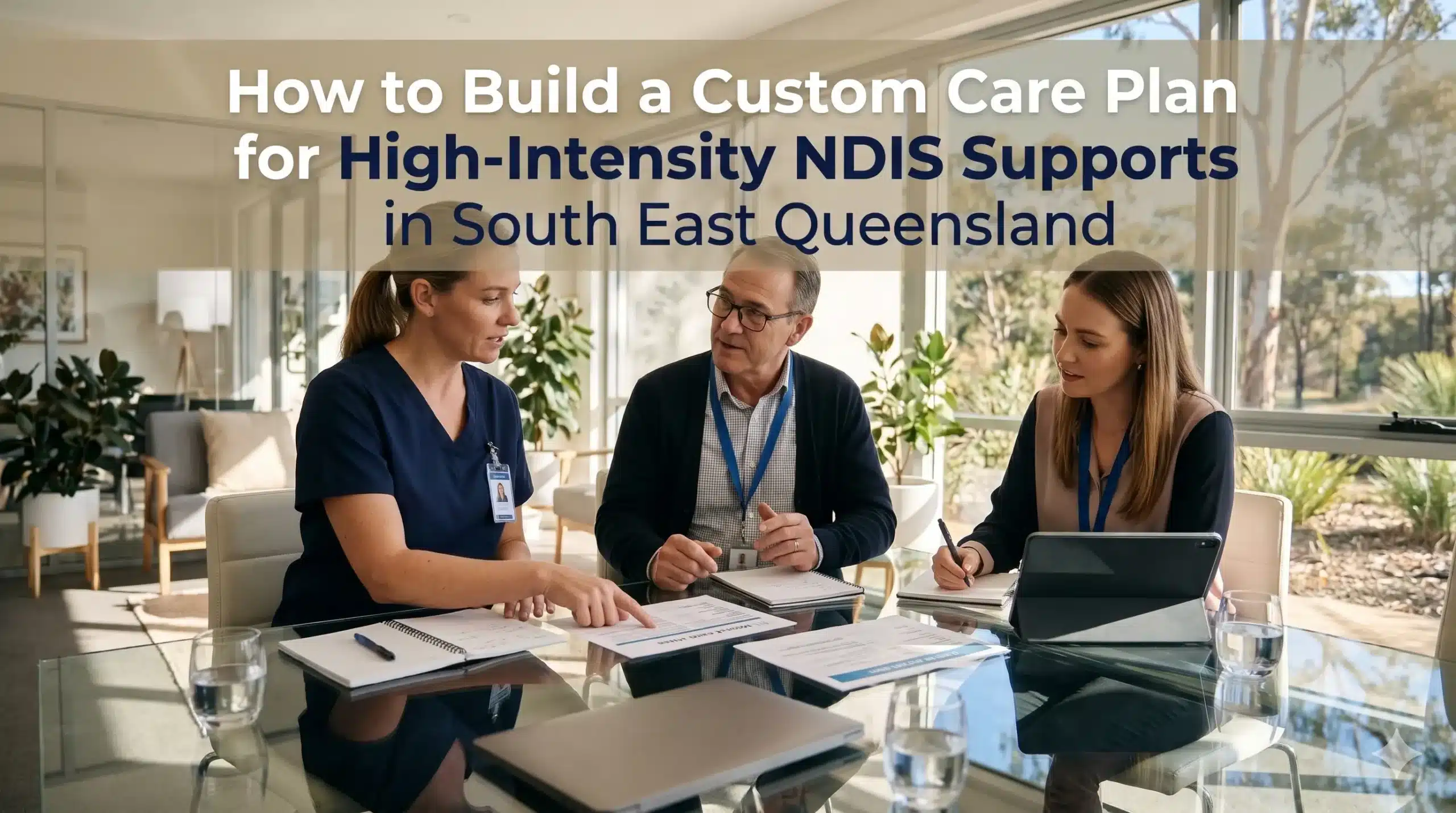
Transitioning a participant with complex medical needs from a hospital bed to their own home is one of the most critical stages in healthcare navigation. Across South East Queensland, Support Coordinators, Plan Managers, and Hospital Social Workers constantly face the challenge of securing safe, audit-ready community support arrangements. Working with a registered NDIS provider ensures participants receive reliable, compliant support tailored to their clinical and daily living requirements. When a participant requires specialised clinical interventions alongside their daily support activities, standard, off-the-shelf care documentation falls far short of what is required.
Building a high-intensity NDIS care plan is not a matter of simply filling out a generic template. It demands a rigorous, clinically led framework anchored by a registered nurse care plan NDIS setup. Every protocol must protect participant safety, honor personal choices, meet strict NDIS Quality and Safeguards Commission rules, and align with the NDIS High Intensity Support Skills Descriptors.
Whether organizing a complex discharge from a Queensland Health facility or upgrading home supports for an existing NDIS participant in South East Queensland, building a detailed, person-centred care plan is essential for securing long-term health outcomes and preserving dignity.
Understanding High Intensity Daily Personal Activities (HIDPA) Under NDIS Rules
To build a compliant support setup, it helps to understand how the National Disability Insurance Agency (NDIA) and the NDIS Quality and Safeguards Commission define high-intensity care.
Under NDIS Practice Standards (specifically Module 1: High Intensity Daily Personal Activities), high-intensity supports apply when a participant requires specialized health interventions to manage complex daily needs. Unlike general Core Supports (Assistance with Daily Life), high-intensity daily personal activities involve health tasks that carry elevated risk if performed incorrectly.
Key Clinical Areas Governed by NDIS High Intensity Skills Descriptors
- Complex Bowel Management: Managing severe constipation, impaction, or risk of autonomic dysreflexia for participants with spinal cord injuries or neurological conditions.
- Enteral Feeding and Management: Providing nutritional support through Percutaneous Endoscopic Gastrostomy (PEG) or Jejunostomy (PEJ) tubes, including feed preparation, pump maintenance, and stoma care.
- Tracheostomy Care: Managing airway clearance, cuff pressure maintenance, suctioning, and emergency cannula replacement.
- Urinary Catheter Management: Caring for indwelling, suprapubic, or clean intermittent catheterization (CIC) systems, including hygiene and infection control.
- Subcutaneous Injections & Medication Administration: Administering complex daily medication regimes or regular injections requiring clinical oversight.
- Ventilator and Airway Management: Supporting participants who rely on non-invasive or invasive ventilation equipment.
- Severe Dysphagia Management: Assisting participants with swallowing difficulties through textured diets, fluid modification, and strict mealtime management plans.
When a participant requires supports in these categories, service providers cannot simply assign support workers to shifts without clinical governance. The NDIS Quality and Safeguards Commission requires a clear trail of clinical assessment, individual care planning, and documented staff competency sign-offs.
Essential Clinical Components of an Audit-Ready Nursing Care Plan
A robust registered nurse care plan NDIS document acts as the central operational guide for everyone involved in a participant’s care. It connects medical directions from treating doctors and specialists with the daily routines carried out by trained Disability Support Workers (DSWs), ensuring consistent NDIS Disability Support Care that meets each participant’s clinical needs, daily living requirements, and individual support goals.
An audit-ready care plan must include three fundamental clinical components:
1. RN Assessment & Risk Mitigation Strategy
Before care begins, an Appropriately Qualified Health Professional (AQHP)—typically a Registered Nurse (RN)—must complete a comprehensive clinical assessment. This assessment evaluates the participant’s medical history, current health status, mobility limitations, communication preferences, and cognitive needs.
The care plan explicitly outlines:
- Health Escalation Protocols: Clear, step-by-step instructions on what support workers must do if a participant shows signs of health deterioration.
- Warning Signs and Red Flags: Specific symptoms (such as elevated blood pressure in autonomic dysreflexia, low oxygen saturation, or stoma site infections) that trigger immediate medical intervention.
- Emergency Contact Hierarchies: Direct phone pathways to the provider’s 24/7 clinical on-call team, treating general practitioners, specialized clinical nurse consultants, and emergency services (000).
2. Specific Task Protocols Aligned with NDIS Skills Descriptors
General directions like “assist with morning care” are insufficient for complex care. Every clinical procedure must have a dedicated, step-by-step protocol that reflects the official NDIS High Intensity Support Skills Descriptors.
For example, a protocol for enteral feeding details:
- Exact feed types, flush volumes, and administration rates prescribed by dietitians or speech pathologists.
- Hygiene and handwashing requirements prior to connecting equipment.
- Correct positioning requirements (e.g., maintaining an upright angle of at least 30 to 45 degrees during and after feeding to prevent aspiration).
- Troubleshooting steps for tube blockages, pump alarms, or stoma irritation.
3. Staff Competency Training & Delegation Logs
Under Australian nursing standards and NDIS guidelines, a Registered Nurse may delegate specific health tasks to trained Disability Support Workers, provided strict safety criteria are met.
The care plan must include a clear competency log showing that every support worker assigned to the participant has been:
- Formally trained in the theoretical aspects of the specific high-intensity support.
- Individually assessed in person by an RN while performing the task for that specific participant.
- Signed off as competent by the RN prior to working unassisted shifts.
This participant-specific competency sign-off ensures support workers understand the unique physical nuances, communication styles, and comfort preferences of the individual they support.
The RN-Led Care Plan Workflow: From Hospital Discharge to Home Care
For Hospital Social Workers, Discharge Coordinators, and Support Coordinators working across South East Queensland health networks, securing a smooth transition from hospital to home is a top priority. Whether coordinating a discharge from Metro South Health facilities like the Princess Alexandra Hospital or Logan Hospital, or Metro North facilities like the Royal Brisbane and Women’s Hospital (RBWH) or Prince Charles Hospital, timing and clinical accuracy are critical. Arranging reliable NDIS In-Home Care Support helps participants receive the right level of assistance with personal care, daily living activities, and ongoing support needs after returning home.
A structured, RN-led care plan workflow ensures participants transition home safely without delays or hospital readmissions.
| Workflow Stage | Primary Activity | Focus & Clinical Oversight |
|---|---|---|
| 1. Pre-Discharge Intake | Clinical Handover | Clinical liaison with hospital social workers & discharge teams |
| 2. RN Clinical Assessment | Bedside / Home Evaluation | Comprehensive assessment by a Registered Nurse |
| 3. Care Plan Authoring | Framework Design | Detailed protocols built around NDIS High Intensity Skills Descriptors |
| 4. Worker Sign-Off | Competency Verification | DSWs trained & individually signed off by the RN for tasks |
| 5. Ongoing Monitoring | Continuous Governance | Scheduled clinical reviews, 24/7 on-call support & plan review evidence |
Step 1: Pre-Discharge Clinical Intake & Handover
The process begins as soon as a hospital social worker or Support Coordinator identifies a participant needing complex care. The service provider’s clinical team liaises directly with hospital nursing staff, allied health teams, and treating specialists to review hospital discharge summaries, medication charts, and therapy recommendations.
Step 2: In-Person RN Clinical Assessment
A Registered Nurse conducts a comprehensive assessment at the participant’s bedside or home. This assessment gathers the necessary details to design an individualized routine that incorporates personal goals, family dynamics, cultural needs, and home environment setups.
Step 3: Drafting the High-Intensity Care Plan
The RN authors a customized care plan containing all clinical protocols, risk management plans, emergency contact workflows, and support worker instructions.
Step 4: Participant-Specific Staff Training & Competency Verification
Before the participant arrives home, assigned support workers complete practical training sessions led by the RN. The nurse verifies that each worker can safely perform the required tasks within the participant’s home environment.
Step 5: Service Commencement & Ongoing Clinical Governance
Once home, the participant receives consistent care supported by 24/7 clinical on-call oversight. The RN conducts regular clinical audits, updates protocols whenever health needs change, and prepares comprehensive clinical reports for upcoming NDIS plan reviews.
Navigating Funding: Disability-Related Health Supports & Core Budget
Securing appropriate NDIS funding for complex care requires a clear understanding of how the NDIA categorizes health-related supports.
Following the integration of Disability-Related Health Supports into the scheme, NDIS plans can fund clinical care items if they directly relate to a participant’s permanent disability. When structuring a high-intensity NDIS care plan, funding is typically split across two primary budget areas:
1. Core Supports (Assistance with Daily Life)
This budget covers the daily delivery of high-intensity supports carried out by trained Disability Support Workers. Because these tasks carry higher risk and require specialized worker competencies, they are billed under High Intensity Daily Personal Activities price limits within the NDIS Pricing Arrangements and Price Limits guide.
2. Capacity Building Supports (Individual Support Services / Nursing)
This budget covers the clinical governance, assessment, and oversight required to maintain safety and compliance. Line items under this category fund:
- Initial clinical assessments and care plan authoring by a Registered Nurse.
- RN training and competency sign-off for support workers.
- Regular clinical plan reviews, wound assessments, or health monitoring visits.
- Authoring detailed nursing evidence reports for NDIA plan review meetings.
For Support Coordinators, presenting clear evidence from a Registered Nurse is essential during plan reviews to demonstrate that high-intensity support funding remains a reasonable and necessary requirement.
Checklist for Support Coordinators & Social Workers: Evaluating High-Intensity Providers
When choosing a service provider for a participant with complex needs, Support Coordinators and hospital teams must verify that the provider has true clinical governance in place.
Use this 6-point checklist to evaluate whether a provider can safely deliver a high-intensity NDIS care plan:
- Is the care plan authored, signed, and routinely reviewed by a qualified Registered Nurse?
- Are support workers individually assessed and signed off in person for participant-specific tasks?
- Does the care plan explicitly reference the official NDIS High Intensity Support Skills Descriptors?
- Does the provider maintain a dedicated 24/7 clinical on-call support line for workers on shift?
- Are clear, documented emergency escalation procedures accessible inside the participant’s home?
- Is the provider fully compliant with the NDIS Quality and Safeguards Commission Practice Standards?
Delivering Quality Complex Care Across South East Queensland
Building a high-intensity care plan requires balancing clinical rigor with person-centred care. For participants living across South East Queensland, having a reliable, clinically governed support setup ensures they can live safely and independently at home while staying connected to their local community.
Service coverage and specialized clinical support teams operate across all major regional hubs:
- Greater Brisbane: Central Brisbane, South Brisbane, Chermside, Lutwyche, Eight Mile Plains, Sunnybank, Mt Gravatt, Forest Lake, and Inala.
- Ipswich & Western Suburbs: Ipswich Central, Brassall, Booval, Ripley, Yamanto, Redbank Plains, and Springfield.
- Logan & Redland Regions: Logan Central, Springwood, Woodridge, Beenleigh, Capalaba, Cleveland, and Victoria Point.
- Moreton Bay Region: North Lakes, Caboolture, Redcliffe, Strathpine, Mango Hill, and Kallangur.
By placing registered nurse leadership at the center of complex care planning, Support Coordinators and families can rest assured that participants receive safe, dignified, and audit-compliant support every single day.