

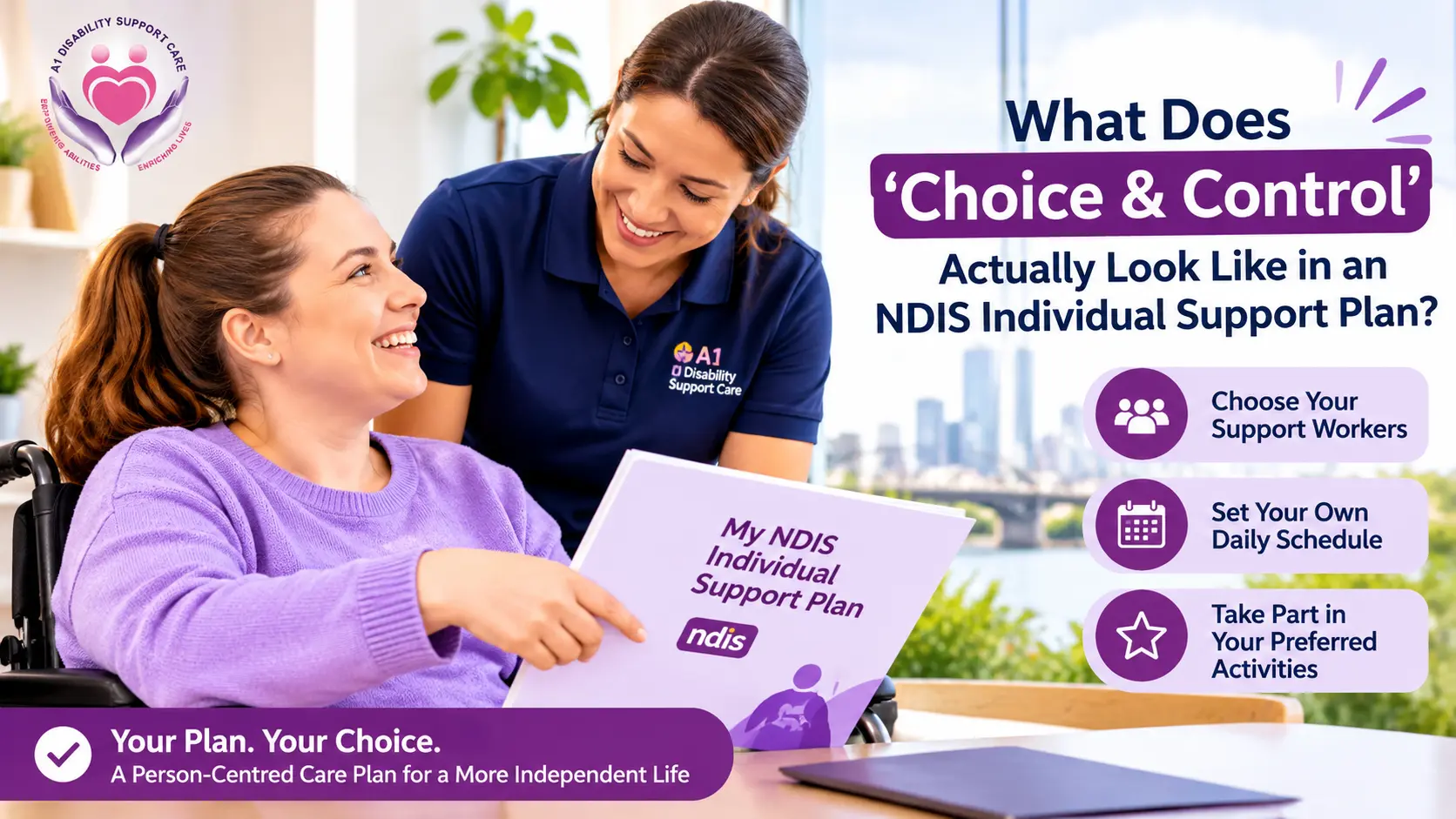
When the National Disability Insurance Scheme (NDIS) was first rolled out across Australia, it promised to transform disability support from a rigid, top-down system into a participant-led model. At the very heart of this system is a phrase you will hear at almost every planning meeting, review, and consultation: Choice and Control.
For many Brisbane families, participants, and carers, however, “choice and control” can quickly sound like plain policy jargon or a marketing catchphrase used by large service providers. You might find yourself asking: What does choice and control actually mean when it comes to my day-to-day life? How should it look inside my written support plan? And why does it sometimes feel like service providers are still calling all the shots?
A true choice and control NDIS care plan is far more than a set of administrative pages. It is a living, working blueprint designed around your unique lifestyle, personal goals, daily routines, and individual preferences. When built properly, a person-centred care plan NDIS puts you firmly in the driver’s seat of your own support. You decide who comes through your front door, how your morning routine is delivered, when you head out into the community, and which goals you want to tackle next.
Whether you live in the northern suburbs around Chermside and Lutwyche, down south in Eight Mile Plains or Logan, out west toward Ipswich, or right near the river in South Brisbane, understanding how to embed your statutory rights into an NDIS individual support plan Brisbane is the single most powerful step you can take toward total independence.
Defining Choice & Control: What Do These Rights Mean Day-to-Day?
To exercise your rights effectively, it helps to strip away the official bureaucracy and look at what “choice” and “control” mean in real, practical terms for an Australian family.
Under the National Disability Insurance Scheme Act 2013, participants are legally guaranteed the authority to make decisions about their own lives. But in your daily routine, those two concepts perform two distinct jobs:
- Choice (Your Options): Choice is all about who and what. It gives you the right to select your own goals, decide which registered or unregistered support providers you want to work with, pick your therapy team, and determine how your NDIS budget is divided across different areas of your life. You are never locked into using a specific provider just because they are large, nearby, or were recommended by someone else.
- Control (Your Direction): Control is all about how, when, and where. It means you direct the exact details of your service delivery. If you want your personal care support worker to arrive at 8:00 AM instead of 6:30 AM, that is your call. If you prefer your support worker to assist you with cooking dinner rather than dropping off pre-made meals, you have the right to set that direction.
The National Disability Insurance Agency (NDIA) sets the overarching rules for funding eligibility, while the NDIS Quality and Safeguards Commission enforces rules to ensure providers operate safely, transparently, and ethically. However, neither the NDIA nor your service provider owns your daily schedule.
A genuine person-centred care plan NDIS reflects your voice, not the operational convenience or staffing rosters of an agency.
3 Ways a Customised Support Plan Guarantees Choice and Control
A quality care plan translates high-level statutory rights into practical, day-to-day actions. Here are three core areas where a tailored NDIS care plan Brisbane protects your autonomy:
1. Support Worker Matching Based on Personality & Preferences
Nothing impacts your quality of life more than the people who enter your home to provide daily personal care activities or household assistance. Standard, cookie-cutter agencies often treat support work as an exercise in filling shift slots—sending whoever is available on the roster that morning.
A customized individual support plan prioritizes NDIS support worker matching. This means your care profile explicitly outlines:
- Personality and Shared Hobbies: Matching you with workers who share your passion for footy, gardening, arts, or local community events.
- Cultural and Language Alignment: Ensuring support workers respect your cultural background, speak your primary language at home, or understand specific family customs.
- Gender and Communication Preferences: Documenting your preference for male or female workers for personal care, as well as preferred communication styles (e.g., clear verbal prompts, picture boards, or low-arousal interactions).
2. Flexible Schedules Suited to Your Routine, Not the Provider’s
Your life should not revolve around an agency’s shift changes. If you enjoy sleeping in on weekends, staying up late to watch a game, or eating dinner at a specific time, your support plan must accommodate those choices.
A customised daily routine NDIS setup ensures your provider builds a flexible NDIS support schedule around your life. Rather than forcing you into rigid two-hour service blocks that suit their operational bottom line, a tailored plan documents your exact daily preferences:
- Morning start times aligned with your natural wake-up routine.
- Evening personal care timed around your preferred bedtime.
- Flexibility to shift hours around for special events, family visits, or medical appointments without financial penalties or hassle.
3. Targeted Community and Social Participation Across Brisbane
Social and community participation should never be limited to generic group outings where everyone is bused to the exact same shopping center every week. True choice and control means using your Core Supports Brisbane funding to engage with activities that genuinely interest you.
With a tailored plan, community access is designed around your individual goals:
- Attending an art class or pottery workshop in West End.
- Visiting the South Bank Parklands or Queensland Museum for a quiet walk.
- Joining a local adaptive sports program or swimming session at your local pool.
- Getting assistance to head out for a coffee along the Brisbane River or take public transport (like the CityCat or train) to build independent travel skills.
Working with NDIA Planners & Local Area Coordinators (LACs) in Brisbane
To get a support plan that truly reflects your choices, you need to work effectively with the professionals who help build and review your NDIS funding. In South East Queensland, your primary contacts during the planning stage are NDIA planners and LACs Brisbane.
A Local Area Coordinator (LAC) acts as the local link between you, the NDIA, and your community. Partner organizations like Carers Queensland deliver LAC services across Greater Brisbane, operating regional hubs in locations like Eight Mile Plains, Lutwyche, Logan Central, Ipswich, and North Lakes.
How to Advocate for Your Choice During Plan Meetings:
- Frame Choices as “Reasonable and Necessary Supports”: When explaining what you want to your LAC or planner, link your choices directly to your plan goals. For example, instead of saying “I want to go to the beach,” frame it as: “I require 1:1 support worker assistance to access community parks and beaches to build my social skills and physical mobility, which is a reasonable and necessary support for my independent living goal.”
- Bring Written Evidence: Bring clear documentation to your meeting. This includes functional capacity assessments from allied health professionals, daily support logs, and a draft of your preferred care plan routine.
- Use Your Carer’s Voice: If a family member or informal carer provides significant support, make sure their perspective is documented. Detail how structured support worker matching and consistent routines protect family carers from burnout and sustain the caring arrangement long-term.
How Your Plan Management Type Impacts Your Choice and Control
The way your NDIS budget is managed plays a massive role in how much freedom you have to choose your support providers. There are three primary NDIS plan management types, each offering different levels of flexibility:
1. Self-Managed
- Provider Choice: Maximum flexibility. You can hire both NDIS-registered providers and non-registered local businesses, independent contractors, or support workers.
- Control Level: Total direct control over service rates, agreements, and scheduling.
- Trade-off: High administrative responsibility. You must process invoices, track budget spending, and keep financial records for auditing.
2. Plan-Managed (Most Popular Choice for Aussie Families)
- Provider Choice: High flexibility. You can use both registered and unregistered providers.
- Control Level: High freedom of choice without the paperwork headaches. An independent, registered Plan Manager pays your invoices out of your NDIS budget allocation (at no out-of-pocket cost to you).
- Trade-off: Requires setting up service agreements and sending invoices through your chosen plan management provider.
3. NDIA-Managed (Agency-Managed)
- Provider Choice: Restricted. You can only use NDIS-registered service providers.
- Control Level: Lower flexibility. You cannot engage non-registered local workers or independent support staff who may better fit your personal routine.
- Trade-off: Zero bookkeeping for you, but significantly narrowed options for local support worker matching.
Red Flags: Is Your Current Provider Restricting Your Choice & Control?
Even with a well-funded NDIS plan, some service providers operate using outdated, agency-first approaches that restrict participant freedom. It is critical to recognize the warning signs of cookie-cutter NDIS support so you can take action quickly:
- Roster Surprises: Support workers turn up at your door without prior notice, or the provider constantly changes your workers without consulting you or asking your preference.
- Take-It-or-Leave-It Scheduling: The provider dictates your service times (e.g., “We only do shower visits between 6:00 AM and 7:00 AM”) rather than accommodating your preferred daily schedule.
- Restrictive NDIS Service Agreement Terms: You are asked to sign agreements with excessively long cancellation notice periods (e.g., requiring 30 or 60 days notice to exit) or hidden administrative fees that trap you with the provider.
- Lack of Transparency: You are not given clear line-item breakdowns of how your Core Supports or Capacity Building budgets are being spent each month.
- Ignoring Personal Preferences: Support workers perform tasks for you rather than working with you to build daily living skills and personal independence.
Remember Your Participant Rights: Under NDIS rules, you are never locked into a provider forever. You have the statutory right to cancel a service agreement (following reasonable notice periods) and switch to a provider that respects your routine, honors your preferences, and values your dignity.
Taking Charge of Your NDIS Journey Across Brisbane
Your NDIS plan belongs to you—not the NDIA, not your LAC, and certainly not your service provider. Achieving true choice and control is about transforming your funding into a lifestyle that brings dignity, independence, confidence, and genuine connection to your local community.
By demanding a personalized, person-centred support plan, choosing the right management pathway, and working with transparent local providers who prioritize worker matching, you can ensure your daily routine looks exactly the way you want it to.
Local Brisbane NDIS Support & Coverage Areas
If you or your family are looking to review your current support plan, connect with local coordinators, or access community participation supports across South East Queensland, dedicated services are available across all major Brisbane regions:
- Brisbane South: Eight Mile Plains, Sunnybank, Calamvale, Inala, Mt Gravatt, Acacia Ridge, Forest Lake, Yeerongpilly
- Brisbane North: Lutwyche, Chermside, Aspley, Kedron, Clayfield, Bracken Ridge, Sandgate, Nundah
- Moreton Bay: North Lakes, Caboolture, Redcliffe, Strathpine, Mango Hill, Kallangur, Albany Creek
- Ipswich & West: Ipswich Central, Brassall, Booval, Ripley, Yamanto, Redbank Plains, Goodna, Springfield
- Logan & Redland: Logan Central, Springwood, Woodridge, Beenleigh, Capalaba, Cleveland, Victoria Point