

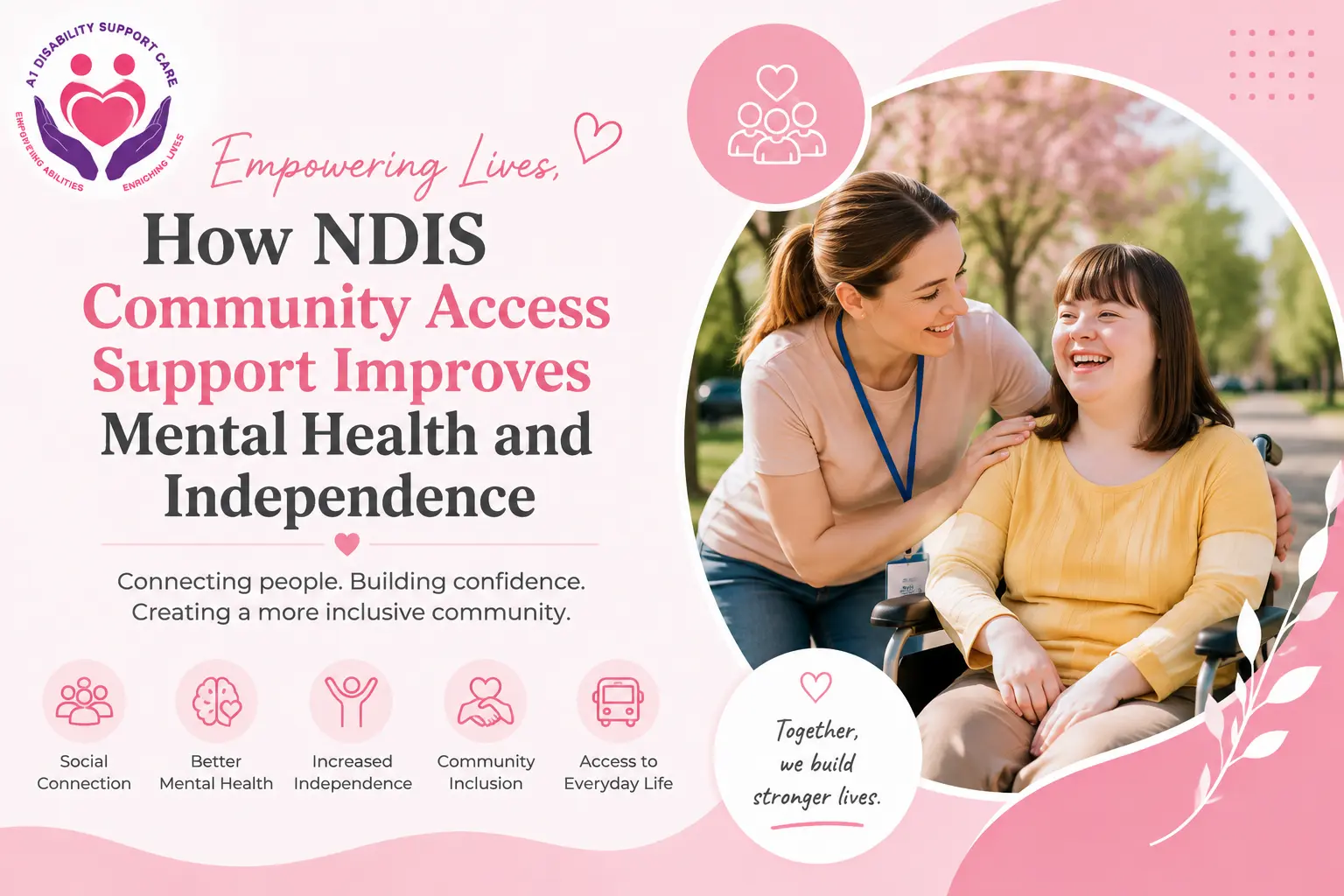
Getting out into the community is something many people take for granted. A trip to the shops, a coffee with a friend, a walk in the park, or a class at the local library are all small things that add up to a full and happy life. For people with disability, these simple outings are not always easy to manage alone. This is where NDIS community access support comes in.
NDIS community access support helps people with disability take part in everyday life outside the home. It is not just about getting from one place to another. It is about building confidence, making friends, learning new skills, and feeling like a real part of the community. In this article, we will look at how this kind of support helps mental health and independence, and what it can look like in real life, with a focus on options in Brisbane.
What Is NDIS Community Access Support?
NDIS community access support is funding and help that lets NDIS participants take part in activities outside their home. This can include things like:
Going to social groups, clubs, or classes
Visiting shops, cafes, and local events
Taking part in sports or exercise groups
Volunteering or trying out work experience
Attending appointments and errands with support
Getting help with transport to and from these activities
This kind of support is often listed under Core Supports in an NDIS plan, and can be used in a flexible way depending on what the person wants to do and how much help they need.
A support worker may go along with the participant to help with things like moving around, talking to others, staying safe, or simply feeling more confident in a new place. Over time, many participants need less and less help, as they build skills and confidence to do more on their own.
Why Community Access Matters for Mental Health
Being cut off from the outside world can have a real effect on a person’s mental health. Humans are social by nature, and most people need some level of contact with others to feel well. For people with disability, barriers like transport, lack of confidence, or not having anyone to go with can lead to spending long periods of time alone at home. Over time, this can lead to some serious problems.
Loneliness and isolation. Spending too much time alone, without enough contact with other people, can lead to loneliness. This has been linked to higher rates of low mood and worry.
Loss of confidence. The less a person gets out and does things, the harder it can feel to start again. This can create a cycle where isolation leads to less confidence, which leads to more isolation.
Fewer chances to build friendships. Friendships often grow out of shared activities, such as a class, a club, or a regular outing. Without these chances, it can be harder to build a support network outside of family.
Less sense of purpose. Regular activities, hobbies, and outings give people something to look forward to and a sense of purpose. Without them, days can start to feel the same and lose meaning.
NDIS community access support helps break this cycle. By making it easier to get out and take part in activities, it gives people regular chances to connect with others, build confidence, and feel like they have a role in their community. Many participants report feeling happier, calmer, and more hopeful once they have regular community access support in place.
Community Participation and Disability: Building Real Connections
Community participation disability support is about more than just getting out of the house. It is about helping people build real, lasting connections with others.
This can happen in many ways:
Joining a local hobby group, such as art, music, gardening, or gaming
Taking part in sports teams or fitness classes suited to different abilities
Attending community events, markets, or festivals
Volunteering with a local charity or group
Going to a regular class, such as cooking, computer skills, or language lessons
The goal is not just to fill up time. It is to help each person find activities that match their interests and strengths, so that community access feels enjoyable rather than like a task on a list. When people take part in activities they actually enjoy, they are much more likely to keep going, and much more likely to make friends along the way.
Support workers play an important role here too. A good support worker does not just take a person from place to place. They help build confidence, encourage social interaction, and step back when the person is ready to do more on their own. Over time, this can lead to real growth in independence.
Social Inclusion NDIS: Feeling Part of the Community
Social inclusion NDIS support is about making sure people with disability are not left on the outside of everyday community life. Being included is not just about being present somewhere. It is about being welcomed, valued, and able to take part in the same way as anyone else.
Some ways NDIS support helps with social inclusion include:
Helping people join mainstream groups and activities, not just disability specific ones
Supporting people to build friendships and relationships in the wider community
Helping people learn the social skills and confidence needed to feel comfortable in new settings
Working with local businesses, clubs, and services to make sure they are welcoming and accessible
Encouraging participants to try new things and expand their interests over time
Real social inclusion takes time and the right kind of support. It also depends on the wider community being open and welcoming. Many local groups and services in Brisbane are working hard to make their spaces more accessible and inclusive, and NDIS support workers can help participants find and connect with these groups.
When people feel truly included, rather than just present, this tends to have a strong effect on their overall wellbeing. Feeling valued and welcomed by others is one of the strongest things linked to good mental health.
Disability Transport Assistance Brisbane: Getting There Safely
One of the biggest barriers to community access is transport. Without a safe and reliable way to get to and from activities, even the best laid plans can fall apart. This is why disability transport assistance Brisbane services are such an important part of community access support.
Transport assistance can include:
Support workers driving participants to and from activities
Help using public transport, such as buses, trains, or ferries
Support to learn how to travel independently over time
Transport to medical appointments, shopping, or social events
Planning safe and accessible routes, especially for people using wheelchairs or other mobility aids
Brisbane has a mix of public transport options and private transport services that can be used as part of an NDIS plan, depending on what is written into the participant’s funding. Some participants use transport support just for special outings, while others use it regularly as part of their weekly routine.
Good transport support does more than just get someone from A to B. It also gives peace of mind to both the participant and their family, knowing that the trip will be safe, on time, and suited to the person’s needs.
Local Activities for NDIS Participants in Brisbane
Brisbane offers a wide range of local activities for NDIS participants, across many different interests and ability levels. Some popular types of activities include:
Community centres and libraries. Many Brisbane libraries and community centres run free or low cost classes, groups, and events that are open to everyone, including people with disability.
Sports and recreation groups. There are disability friendly sports clubs, swimming groups, and fitness classes across Brisbane, offering both social time and physical activity.
Art and creative groups. Art classes, music groups, and craft sessions are popular ways for NDIS participants to express themselves and meet others with similar interests.
Parks and outdoor spaces. Brisbane’s parks, riverside walks, and gardens offer relaxed, low pressure places for outdoor activities and time with support workers or friends.
Markets and local events. Weekend markets, festivals, and community events give participants a chance to get out, enjoy the atmosphere, and take part in everyday Brisbane life.
Volunteering opportunities. Many local charities and organisations welcome volunteers of all abilities, giving participants a sense of purpose and a chance to build work related skills.
A good support worker or provider will often know the local area well, and can help match participants to activities that suit their interests, rather than just picking something at random. This local knowledge can make a big difference in how much a person enjoys and sticks with an activity over time.
Building Independence Through Community Access
While mental health is one major benefit of community access support, building independence is just as important. Over time, regular community access can help participants:
Learn to use public transport safely and with more confidence
Build everyday skills like shopping, ordering food, or handling money
Get more comfortable talking to new people and handling new situations
Try out different interests and hobbies to discover what they enjoy
Build routines and habits that support a fuller, more active life
Take small steps towards study, volunteering, or paid work
Independence does not usually happen overnight. It tends to build slowly, through repeated chances to practise new skills in real world settings, with the right amount of support at each stage. A good NDIS plan will often include community access support that changes over time, giving more support at the start and gradually stepping back as the participant grows in confidence and skill.
How to Get the Most Out of Community Access Support
For NDIS participants and their families, a few things can help make the most of community access support:
Talk about interests, not just needs. When planning activities, it helps to focus on what the person actually enjoys, not just what fills up time.
Start small and build up. Trying one new activity at a time, rather than a full new schedule all at once, can help build confidence without feeling overwhelming.
Choose a support worker who is a good match. A support worker with a similar sense of humour or shared interests can make community outings much more enjoyable.
Review and adjust the plan. What works well at one stage may need to change over time, as interests and confidence grow.
Use local knowledge. A provider who knows the Brisbane area well can help find activities, transport options, and groups that suit the person’s needs.
Talking openly with your support coordinator or provider about what is working and what is not can help make sure community access support stays useful and enjoyable over time.
Signs a Person Might Benefit from More Community Access Support
Sometimes it is not obvious that someone needs more support to get out and about. Families and carers can watch for a few signs that community access support might help.
Spending most days at home, with little contact outside close family
Losing interest in things they used to enjoy doing outside the house
Feeling nervous or unsure about going out, even to familiar places
Having fewer friends or social contacts than they would like
Relying heavily on family members for outings, which can be tiring for everyone
Feeling low, flat, or bored on most days
If any of these sound familiar, it may be worth having a chat with a support coordinator or provider about adding or increasing community access support in an NDIS plan. Sometimes even a small change, like one regular weekly outing, can make a real difference to how a person feels.
It is also worth remembering that needs can change over time. A person who once needed a lot of support to leave the house may, after some time with the right help, feel ready to try new things or go out with less support. On the other hand, someone going through a hard time may need more support for a while. A good plan should be flexible enough to change along with the person.
Why Choose A1 Disability Care
If you are looking for a provider to help with community access, transport, and social activities in Brisbane, A1 Disability Support Care is worth considering. Here is what they offer.
Wide range of community access support. A1 helps participants take part in social groups, outings, hobbies, and local events, matched to each person’s interests.
Registered NDIS provider. A1 follows the NDIS Practice Standards and Code of Conduct, so their support meets the quality rules set by the NDIS.
Well checked support workers. Every team member goes through careful checks, including NDIS Worker Screening Checks and Blue Cards, so families can feel confident about who is supporting their loved one.
Transport support included. A1 can help with safe transport to and from activities, appointments, and outings across Brisbane.
Strong local knowledge. A1 supports people across many Brisbane suburbs, including Fortitude Valley, New Farm, Wooloowin, Bulimba, Camp Hill, Ashgrove, Eatons Hill, and Woolloongabba, and uses this local knowledge to match participants with activities and groups that suit them.
Focus on building independence. A1 aims to help participants grow in confidence and skill over time, rather than offering the same level of support forever.
If you are new to NDIS community access support, a provider like A1 can help explain how it fits into your plan, and help build a routine of activities that feels enjoyable rather than like a chore.
Final Thoughts
NDIS community access support is about much more than getting out of the house. It plays a real role in mental health, helping reduce loneliness, build confidence, and give people a sense of purpose. It also plays a key role in building independence, helping participants learn new skills and take on more of everyday life over time.
For NDIS participants and their families in Brisbane, there are many local activities, transport options, and support services available to help make community access a regular and enjoyable part of life. With the right support in place, getting out into the community can become something to look forward to, rather than something to worry about.